Web3 Security Checklist Generator

Andre Costa
Published on:
Oct 9, 2025
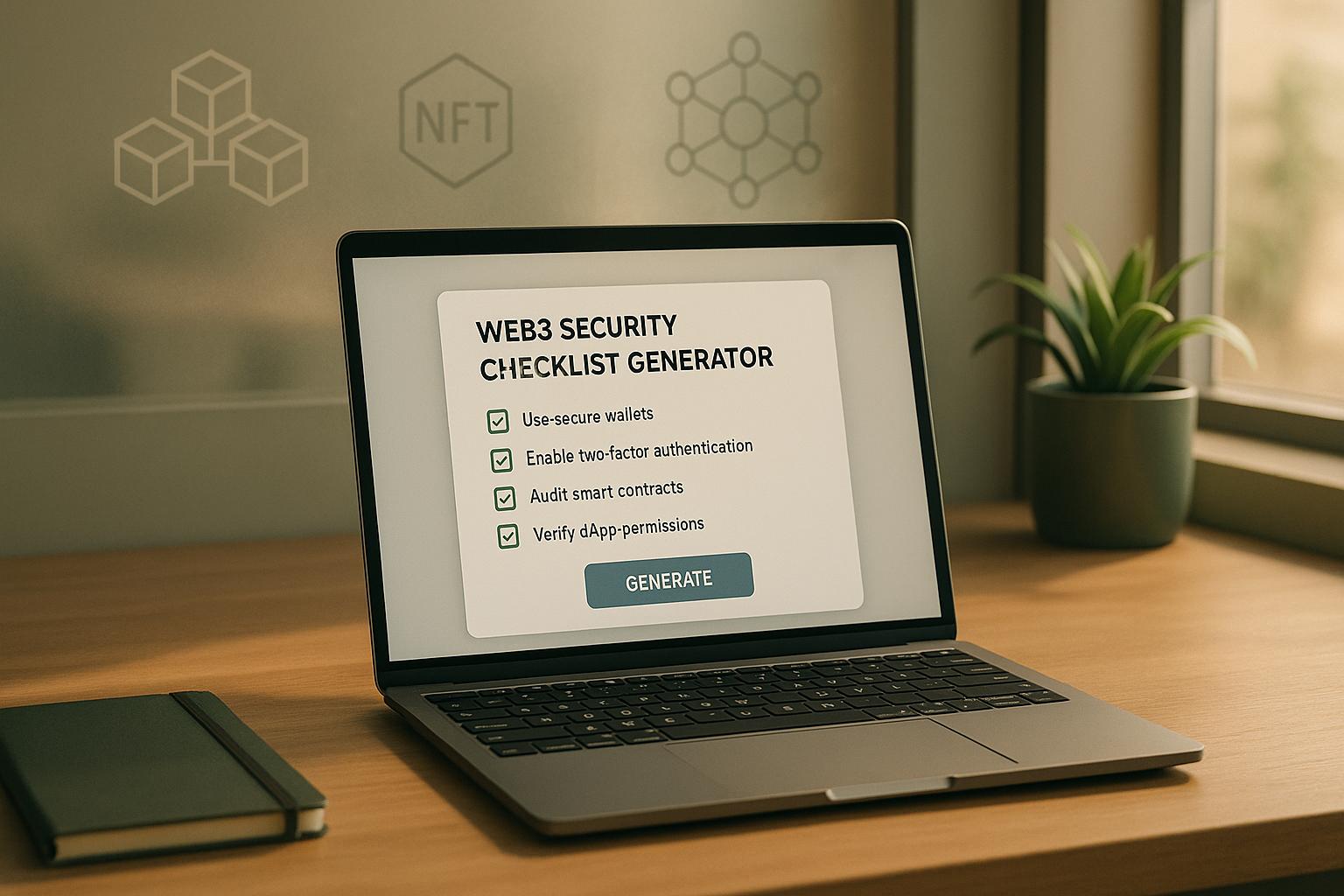
Secure Your Web3 Project with a Custom Checklist
Building a Web3 application, whether it’s a decentralized finance platform or an NFT collection, comes with incredible potential—and equally significant risks. The blockchain space is rife with stories of hacks and exploits that have cost projects millions due to overlooked vulnerabilities. That’s where a tailored approach to safety becomes invaluable. By focusing on the specific needs of your project, you can address critical issues before they become costly mistakes.
Why Security Matters in Blockchain Development
When you’re working on a decentralized app or smart contract, the stakes are high. A small coding error or misconfiguration can open the door to attackers. Using a tool to generate a personalized safety plan ensures you’re covering the bases—whether it’s testing for common exploits or setting up secure wallet solutions. This isn’t just about ticking boxes; it’s about protecting your users and your reputation in a space that’s still earning trust.
Start with the Right Tools
Don’t leave your project exposed. Take a proactive step by mapping out the safeguards that match your platform and features. With the right preparation, you’ll launch with confidence, knowing you’ve minimized risks as much as possible.
FAQs
Why do I need a Web3 security checklist for my project?
Web3 projects, especially those involving smart contracts, are prime targets for hackers. A single vulnerability can lead to millions in losses—think of the countless DeFi exploits we’ve seen. This checklist helps you spot potential weak points based on your project’s unique setup, so you’re not just following generic advice. It’s like having a security consultant guide you through the essentials, from audits to multi-sig wallets, before you go live.
Can this tool replace a professional security audit?
Not at all. While this generator provides a solid starting point with best practices tailored to your project, it’s no substitute for a thorough audit by a security expert. Think of it as a roadmap to prep your project—highlighting critical areas like reentrancy risks or access control issues—but for high-stakes launches, you’ll still want a trained eye to dive deep into your code and architecture.
How accurate are the severity ratings in the checklist?
The severity ratings—critical, high, or medium—are based on industry-standard best practices and common attack vectors in Web3. For instance, something like failing to test for reentrancy might be flagged as critical because it’s a well-known exploit with devastating potential. That said, every project is unique, so use these ratings as a guide and adjust based on your specific context or risk tolerance.